
A Safer Way to Sign Up Online: When a Disposable Email Actually Makes Sense
Signing up online has become a routine part of daily internet use. You create an account to test a tool, unlock a download, join a forum, claim a discount, or verify access to a service. The problem is not the sign-up itself. The problem is that many people use the same personal email address everywhere, even when the registration is low priority, short term, or unlikely to matter later.
That habit can slowly turn your main inbox into a place filled with promotional messages, follow-up reminders, and email you never really wanted in the first place. A disposable email address can help in the right situations by keeping routine sign-ups separate from your important inbox activity.
This article explains when disposable email makes sense, which online sign-ups deserve more caution, and how to build a safer sign-up workflow without making everything complicated.
If you want more background about the service itself, you can also review our About Us, Privacy Policy, and Terms and Conditions.
Why Giving Your Real Email Everywhere Is a Bad Default Habit
Your real email address is often connected to your most important digital activity. It may be tied to password recovery, financial notices, personal communication, subscriptions, or long-term accounts that you actually depend on. When that same address is used for every random sign-up, the result is simple: your primary inbox becomes harder to manage.
Over time, this creates three common problems:
- More inbox clutter from low-value sign-ups
- More exposure of your real email address across many websites
- Less control over what reaches your most important inbox
Not every site is malicious. But not every site deserves permanent access to the same inbox you use for important communication.
What a Disposable Email Is Really For
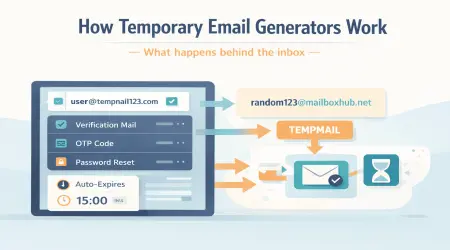
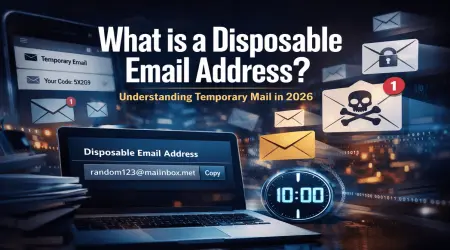
A disposable email address is best understood as a short-term utility inbox. It is not meant to replace your primary email address completely. Instead, it helps you handle situations where you only need email access briefly, such as:
- one-time verification
- trial registrations
- public or low-priority sign-ups
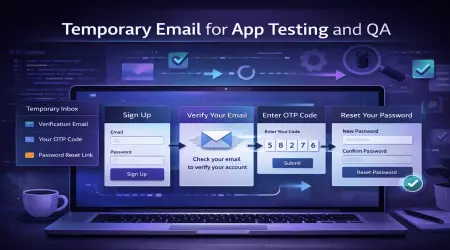
- testing signup flows
- temporary access to tools or resources
Used this way, a disposable inbox can help you keep your real inbox more focused on messages that actually matter long term.
5 Red Flags Before You Enter Your Real Email
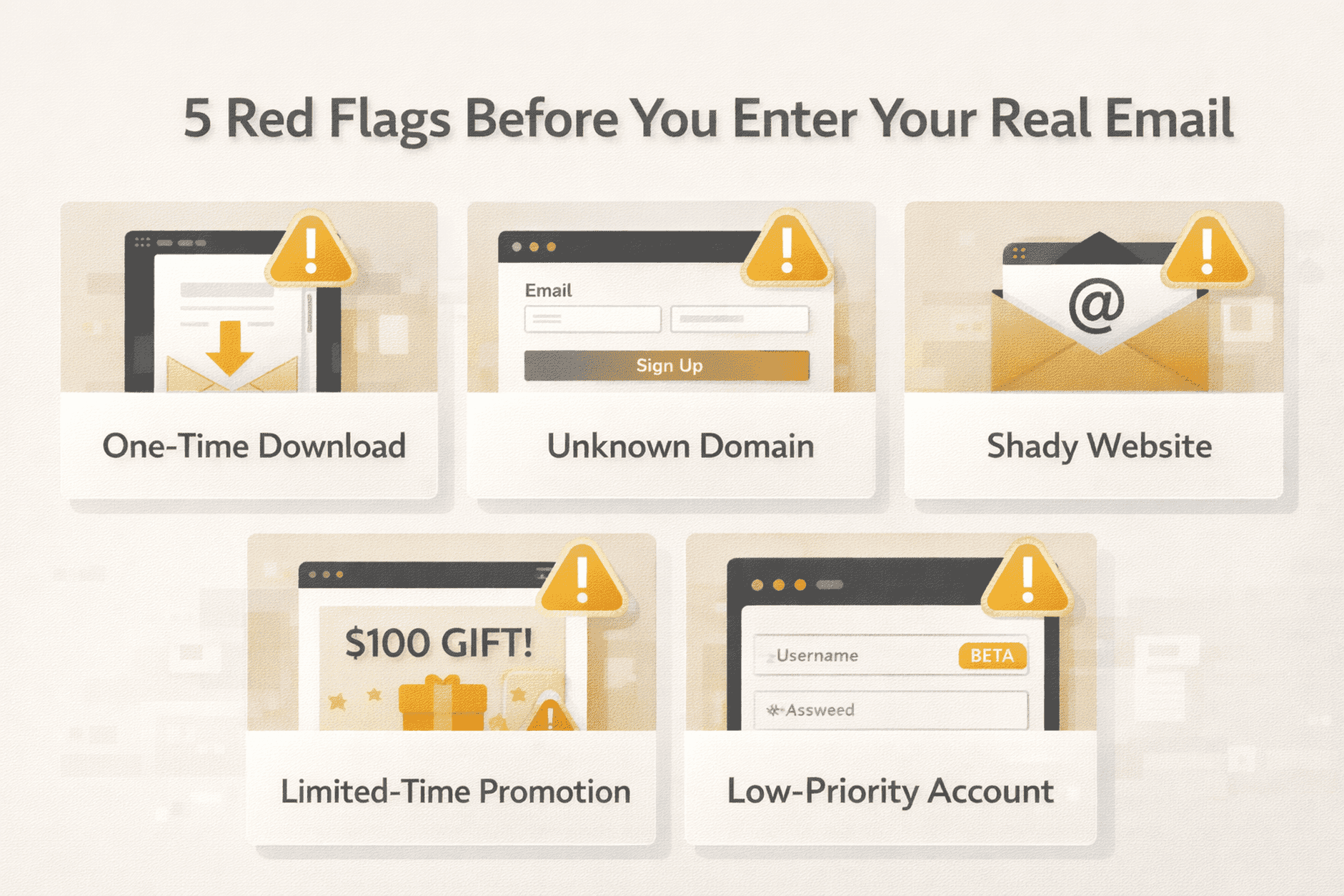
Before you type your personal email address into a sign-up form, take a moment to check for a few warning signs. If several of these appear together, that registration may not deserve your primary inbox.
Watch for these red flags:
- The site only offers a quick reward, download, or temporary access
- You are not sure whether you will ever return to the service
- The page feels heavily promotional or lead-focused
- You do not want future updates, reminders, or sales messages
- The account is low priority and does not need long-term recovery access
These signs do not automatically mean the site is unsafe. They simply suggest that your real inbox may not be the best place for that particular registration.
A Better Sign-Up Workflow for Everyday Use
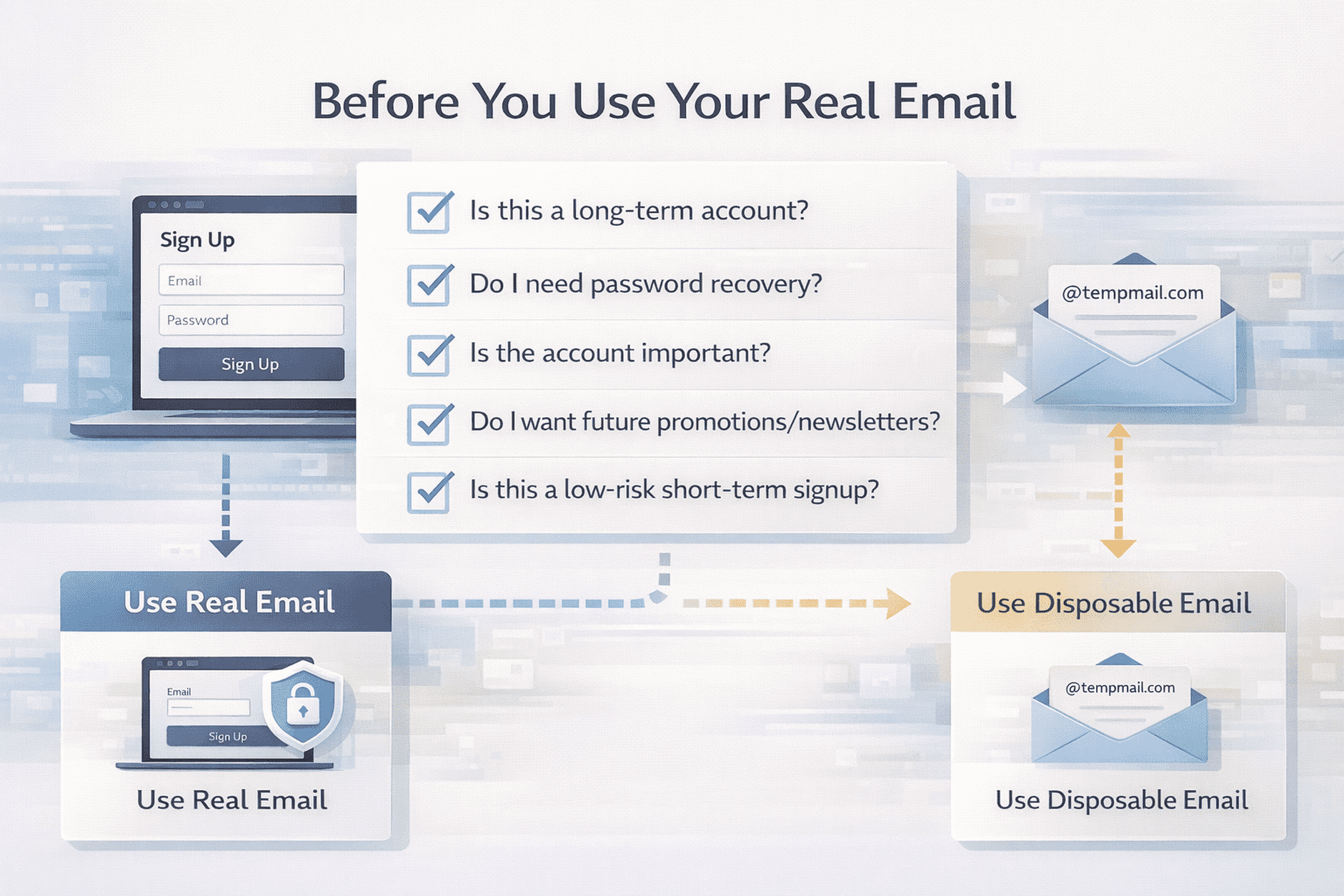
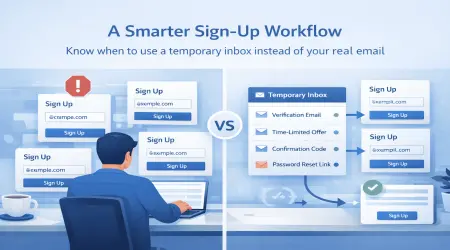
A smarter approach is not to use disposable email for everything. It is to stop treating every sign-up the same way. A simple decision workflow makes this easier:
Use this sign-up decision workflow:
- Ask whether the account will matter long term
- If yes, use your real email address
- If no, ask whether the sign-up is short term, low risk, or experimental
- If yes, consider using a disposable inbox
- Complete the task, then keep your primary inbox reserved for higher-value communication
This workflow is useful because it replaces guesswork with a simple habit. You do not need to overthink every sign-up. You just need a better default decision process.
Where Disposable Email Makes the Most Sense
Disposable email is usually most helpful when the registration is routine, temporary, and not tied to important future access. Examples include:
- joining a trial you only want to test once
- receiving a one-time verification email
- accessing a low-priority community or public forum
- testing forms or onboarding flows
- signing up for tools you may not keep using
In these situations, a temporary inbox can reduce future inbox clutter and limit how widely your real address is shared.
Where Disposable Email Does Not Belong
There are also clear situations where a disposable inbox is the wrong choice. If the account is important, private, long term, or tied to recovery needs, your real email is usually the better option.
- banking or financial accounts
- password recovery for services you actually rely on
- medical, legal, or highly personal communication
- important work or business accounts
- accounts that require long-term stability and records
Important: Temporary inboxes may be public and are not intended for banking or sensitive accounts.
Why This Helps More Than People Expect
Many people think disposable email only solves one small problem. In reality, it can improve several parts of your online workflow at once:
- it can reduce future inbox clutter
- it helps separate low-priority sign-ups from important email
- it gives you more control over short-term registrations
- it makes it easier to keep your primary inbox more organized
That is the real value. It is not about pretending to be invisible online. It is about making more intentional decisions about where your real inbox is used.
A Practical Example
Imagine you want to try a new online service that asks for email verification before showing you a demo. You do not know whether the tool is worth keeping, and you do not want future promotions going to your main inbox.
In that case, a disposable inbox can support a cleaner process:
- create a temporary email address
- use it to register for the service
- receive the verification email
- complete access
- keep your personal inbox free from future low-priority email
That is a realistic, low-risk example of where disposable email makes sense.
Common Mistakes to Avoid
One common mistake is using a disposable inbox for an account that later becomes important. Another is assuming that every temporary email service works the same way.
Some services may differ in:
- mailbox duration
- attachment support
- availability of domains
- message access behavior
That is why disposable email should be treated as a short-term convenience tool, not as a replacement for your main email account.
How TempMail Bank Fits Into This Workflow
TempMail Bank is designed for short-term sign-ups, basic verification, and routine temporary inbox use. It can help when you want to handle low-priority registrations more cleanly without relying on your main inbox every time.
The goal is not to use temporary email everywhere. The goal is to use it where it actually makes sense.
Final Thoughts
A safer sign-up workflow starts with a simple mindset shift: not every website deserves your real email address. If a registration is low priority, short term, and unlikely to matter later, a disposable inbox may be the better option. If the account is important, sensitive, or long term, your real inbox is still the right choice.
Making that distinction more consistently can help you reduce clutter, limit unnecessary exposure, and keep your main inbox more focused on what actually matters.
FAQ
When does disposable email make the most sense?
It is most useful for short-term sign-ups, one-time verification, trial access, and low-priority registrations that do not need long-term recovery support.
Should I use disposable email for important accounts?
No. Important accounts such as banking, sensitive services, business-critical tools, and password recovery workflows are better suited to your real email address.
Can disposable email reduce spam?
Yes. It can help reduce spam in your primary inbox by separating low-value sign-ups from your long-term personal email use.
Does disposable email make me fully anonymous online?
No. It can reduce unnecessary exposure of your real email address, but it does not replace strong passwords, careful browsing, or broader privacy and security practices.